Introduction
OMRON has four major business segments: control equipment, healthcare, social systems, and electronic components.
OMRON has launched its long-term vision "SF2030 (Shaping the Future 2030)" in April 2022.
We will continue to create social needs with automation that enables people to live in response to the three challenges of realization of carbon neutrality, the realization of a digital society, and the extension of healthy life expectancy.
- Mission
- Three Strengths
- Social Issues
and Solutions - Product
Introduction - DMS
in Numbers - Manufacturing
Bases
Mission
With Our “Connecting” and
“Switching”*1Technologies, We Resolve
Social Issues with Our Customers
With our core "connecting and disconnecting" technology, we will realize the "functions" required by society and customers, and create new social value that contributes to the "realization of a carbon-neutral and digital society."
*1 Improving the quality of devices & modules such as relays, switches, connectors, sensors, etc. Their functions to connect and disconnect (turn on and off) and sense the electricity flowing through a product. Click here for details of the core technology.
Three Strengths



Extensive customer
experience and
global sales network
Reliable quality and
performance
Technology centered on
"connecting and
disconnecting"
Click here for more information
View as PDF
Social Issues and Solutions
(Social Issues and Approaches to Solutions)
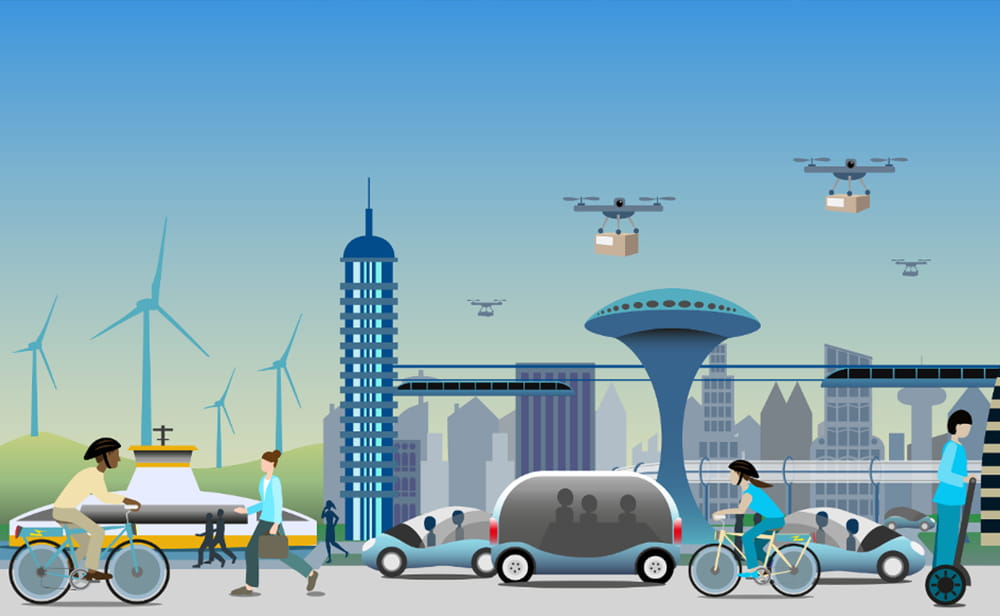
In our vision of society in 2030, new energy sources with low environmental impact will be introduced, and all products and infrastructure will be DC.
The increasing speed and capacity of telecommunications and the IoT in society and the home will keep all products connected and operating stably, resulting in ever more convenient and comfortable lifestyles. Furthermore, it is now commonplace that all such products are environmentally friendly.
To help realize this society, OMRON will create devices that support the spread of new energy and high-speed communications.
Climate change (global warming)
Achieving carbon neutrality and contributing to the spread of new energies*2
Contributing to reliable DC interruption and low power consumption to ensure the safety of new energy infrastructure and products.
*2 New energy: Renewable energy and innovative energy such as hydrogen and fuel cells

Aging society and widening economic disparity among individuals
Realization of a digital society and contributing to the spread of high-speed communications
It overcomes the restrictions and challenges of equipment created by the evolution of semiconductors, and contributes to the reliability of high-frequency switching and digitization of sensory information.

We will solve these problems with solutions in these two areas where further growth opportunities are expected, with solutions centered on devices and modules.
DC Equipment
One of the measures to combat climate change is to reduce CO2 emissions. The shift from engine to electric drive is progressing, requiring higher performance DC (direct current) products*3.
Electric products using batteries and motors are expected to replace conventional engine-driven products in the future.
For sustainable energy utilization, the flow of power generation, storage, and usage will become the mainstream, and the importance of short-circuit prevention and electric shock prevention will increase.
OMRON will contribute to the realization of carbon neutrality by developing a broad lineup of high-capacity products and providing technologies that safely interrupt current with minimal heat generation.
*3 DC products: Products that run on direct current
High-frequency equipment
To solve the labor shortage caused by the declining birthrate and aging population, the spread of high-speed communications such as 5G/6G is accelerating, and semiconductors are becoming faster and larger in capacity.
Omron will contribute to the evolution of high-speed communications together with our customers by making prompt proposals, making full use of our core fine mechanical technology.

Product Introduction
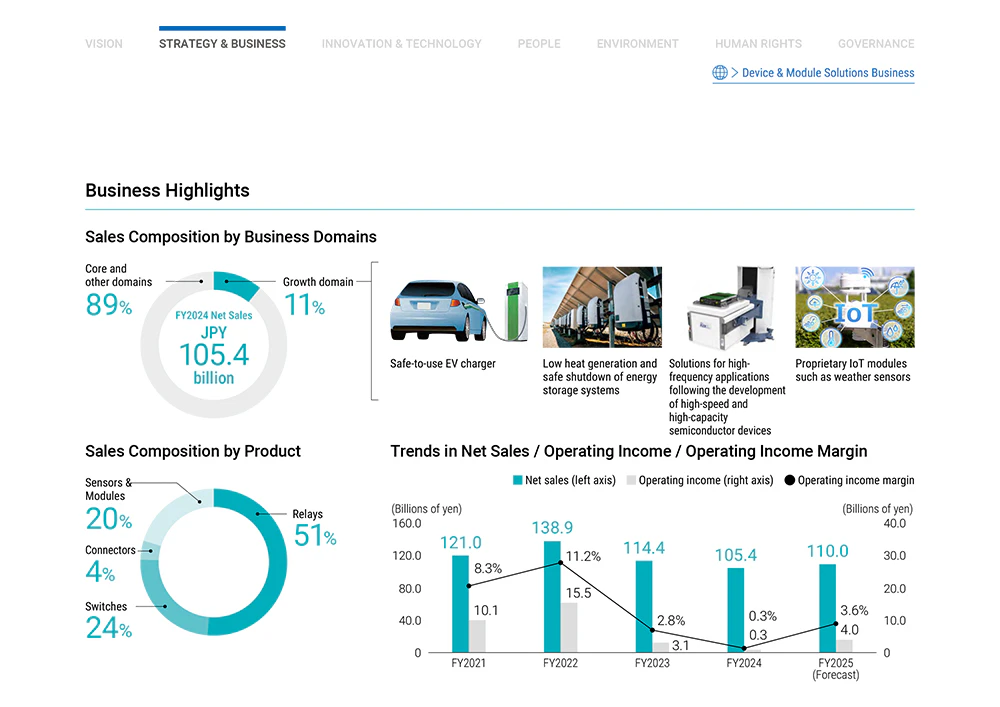
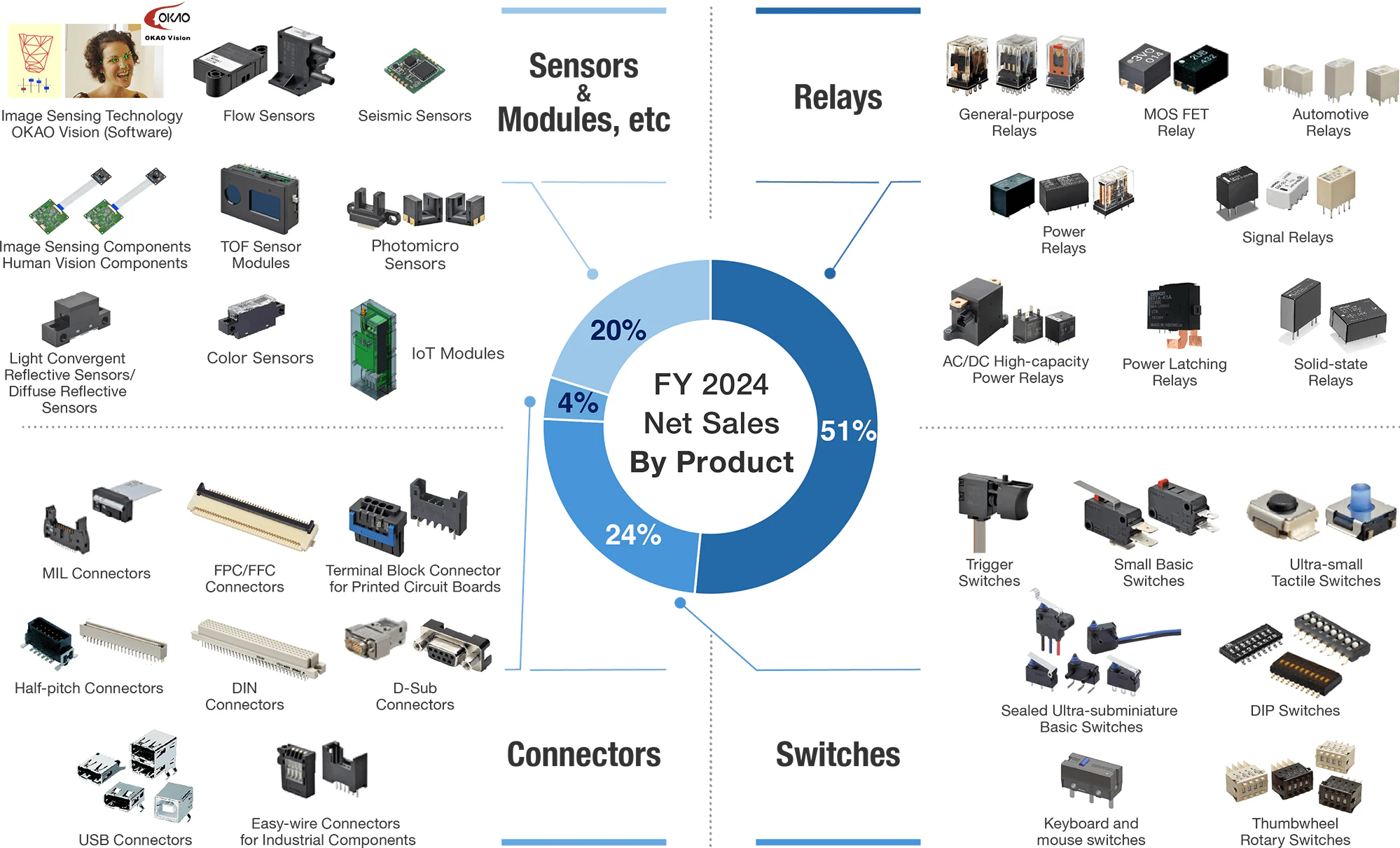
Providing solutions to realize the necessary functions with devices & modules for a carbon-neutral digital society.
DMS in Numbers
![DMS Global. As of end of March 2025. [Basic data] Net Sales(Third-party sales): 105.4 billion yen. Overseas Sales Ratio: 73%. Production Sites: 11 sites. Owned Patents: 2800+. Group Employees(incl. non-permanent): 7600 Staffs. Global Talent(International-to-Japanese staff ratio): 7:3. Annual Production Volume: 2 billion. DMS Website pageviews: 2.5 million. [Sustainability (*)] GHG Emissions: 35Kt-CO2 vs. FY21 -36Kt. Energy Consumption: 115GWh vs.FY21 -29GWh. In-house Power Generation(incl. on-site PPA): 3801MWh 962 household equivalent(**). Water intake: 481k㎥ vs. FY21 -80k㎥.](/us-en/sites/components.omron.com.us/files/2025-10/omron_figure05-eng.webp)
*The subject is the overall total of DMS production sites in FY24 (in-house research)
**The average electricity consumption per household is 3,950 kWh per year (March 2022 survey by the Ministry of the Environment)
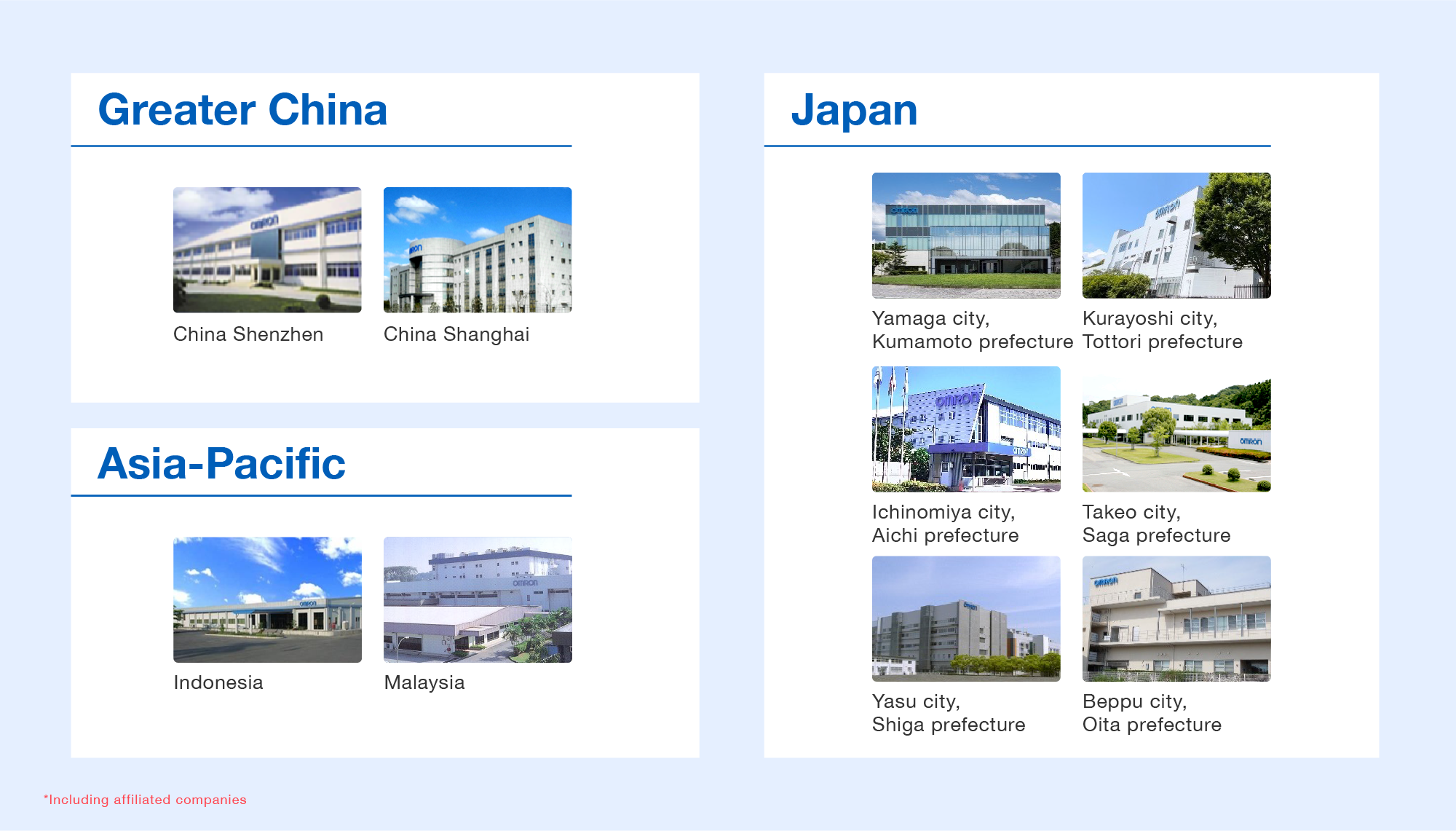
Manufacturing Bases
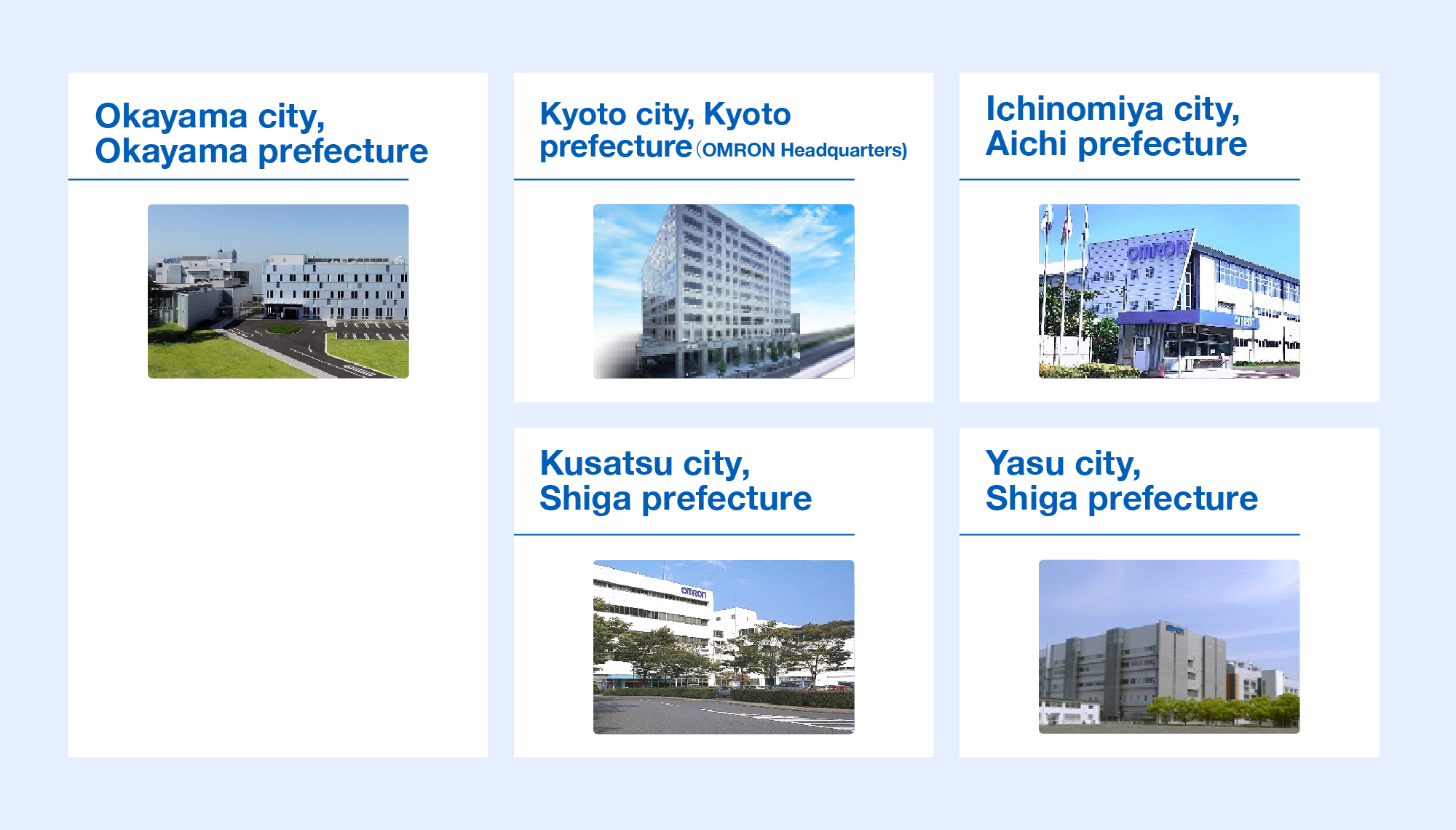
Approximately 8,000 employees are involved in making DMS products and delivered to our customers.The manufacturing bases in Japan is in charge of producing high-quality products using state-of-the-art production systems, and function as mother factories to manage the overseas production. Furthermore, our global production system enables quick response to customers’ QCD demands.
Technology and Product Development Sites
Production
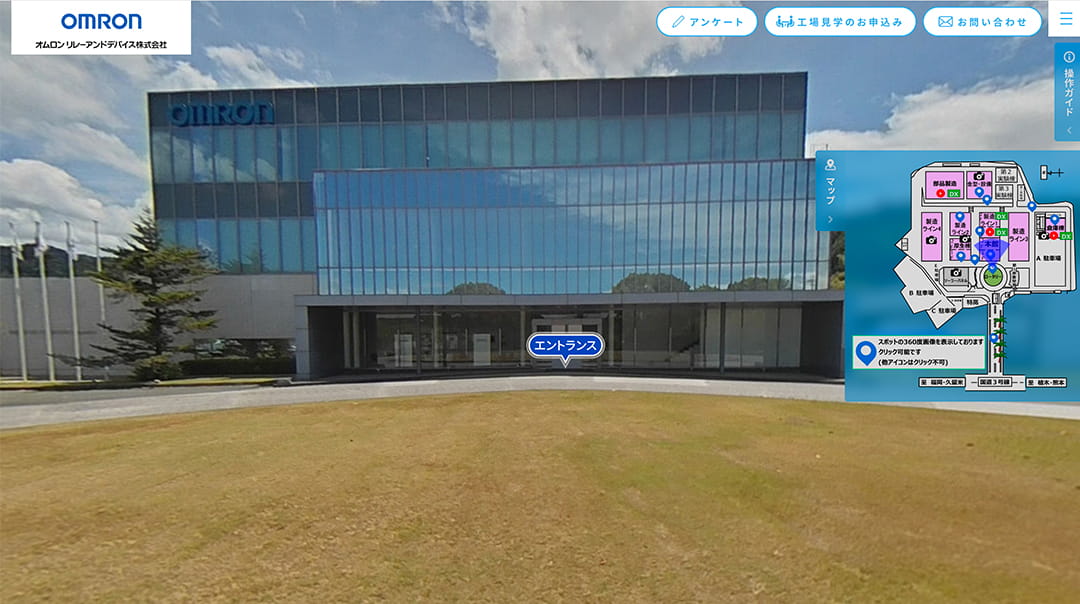
Introduction of Yamaga factory in Japan (Virtual factory tour)
Sales
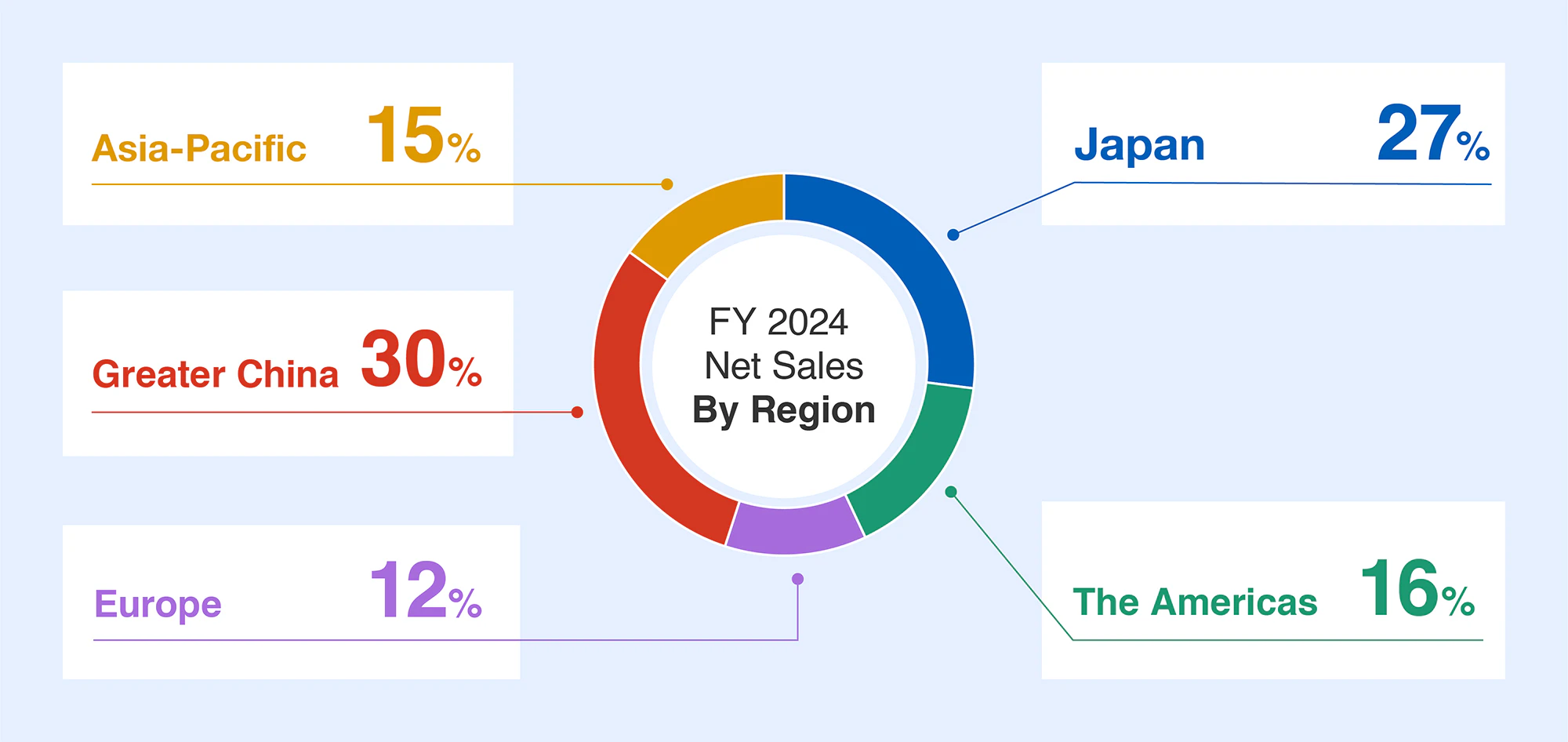
*Home office included.